TOPABEL KNOWLEDGE SERIES / 05
Rings, grids, crosses and outlines: how to read a target face
Rings help you identify a zone and read any assigned score. Grids let you describe a position by rows, columns and squares. A cross makes a designated reference centre easy to find. An outline makes a shape recognisable and separates its inside from the surrounding area. Each pattern answers a different question.
Know the formats · About 6 min read
Remember four actions
Rings: read the zone, then any assigned score
A plain mark only tells you that something is on the paper. Concentric rings add a shared centre and a series of bands, so you can describe whether the mark is in an inner or an outer region. If the design assigns scores to those regions, the rings also provide boundaries for reading the score. The values and boundary rules come from that particular layout or event.
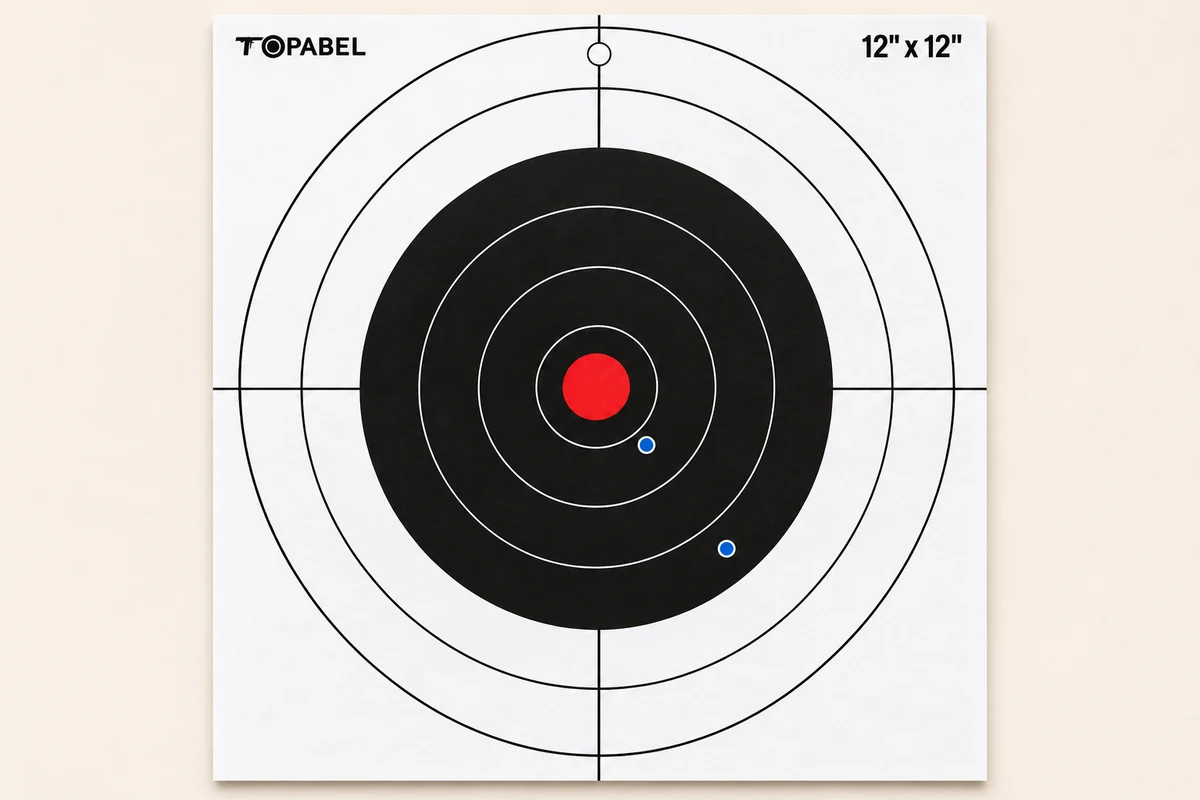
- Inner record mark
- Outer record mark
Educational illustration generated with reference to TOPABEL products · blue marks are explanatory annotations
- Read the picture
- The two blue marks fall in different bands. The rings give each mark a zone to refer to.
- What it helps you record
- Describe a mark’s region and, where defined, record the region’s assigned score.
- Remember
- Rings divide the face into nested zones.
The blue dots are annotations, not impact marks. This illustration does not assign competition scores.
Grid: replace a vague position with rows and squares
A grid repeats horizontal and vertical lines. Instead of estimating a position in empty space, you can refer to a row, a column and the squares between two marks. It works like squared paper: one direction describes horizontal position and the other describes vertical position. This is useful for keeping a position record that another person can understand.
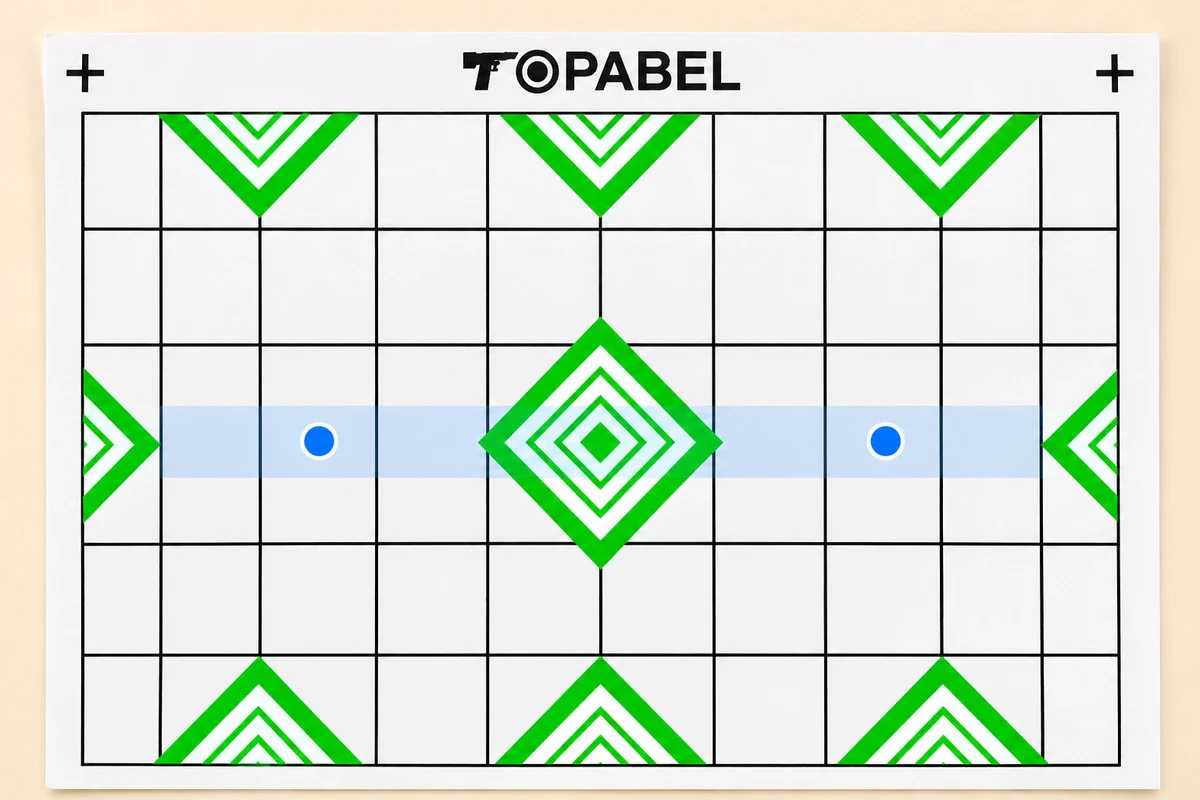
- First mark in this row
- Second mark in the same row
Educational illustration generated with reference to TOPABEL products · blue marks are explanatory annotations
- Read the picture
- Both blue marks share a row but occupy different columns. Follow the squares to describe their separation.
- What it helps you record
- Record positions and compare horizontal or vertical spacing using a consistent visual reference.
- Remember
- A grid turns the page into squared paper.
A square on screen has no fixed physical size. Read the printed grid spacing and unit for the selected design before converting squares to a length.
Cross: make the reference centre immediately visible
Two lines meet at one identifiable intersection. A cross uses that simple feature to establish a designated reference point and make the horizontal and vertical directions visible. You can describe another mark as above, below, left or right of that intersection. The cross is good at identifying the reference; a surrounding grid supplies additional spacing references.
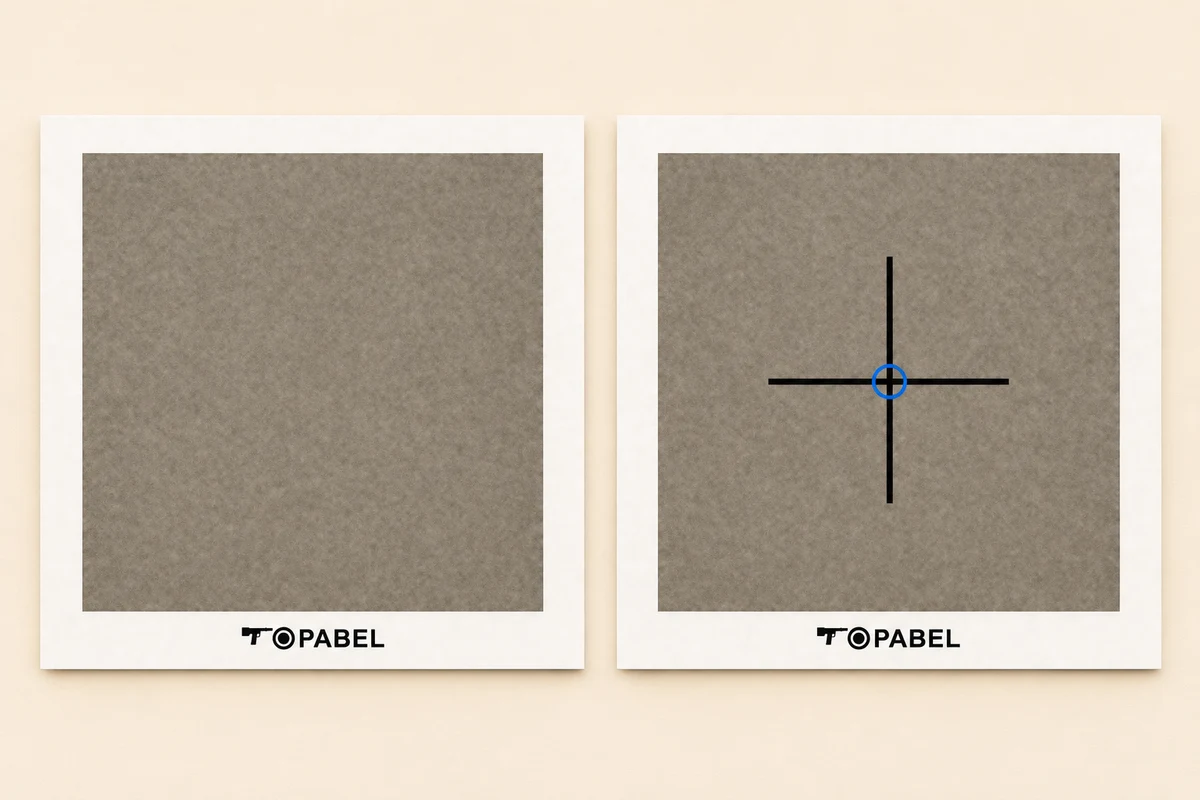
- Cross removed for comparison
- The intersection identifies a reference
Cross-layout illustration based on a TOPABEL product · left face simplified, blue circle added for explanation
- Read the picture
- The right-hand face has an explicit intersection. The reference location can be identified directly.
- What it helps you record
- Use the same reference point when describing other positions on that design.
- Remember
- The cross identifies the reference; the grid adds squares around it.
Here, “centre” means the reference intersection designated by the layout. This section explains the printed cross, not thermal performance.
Outline: recognise the subject and its boundary
An outline follows the external shape of a subject. Even when the colour, texture and background are removed, features such as ears, a muzzle, legs and a tail keep an animal silhouette recognisable. On a target face, that boundary establishes the theme and separates the depicted shape from the surrounding area. Any internal scoring regions are additional information.
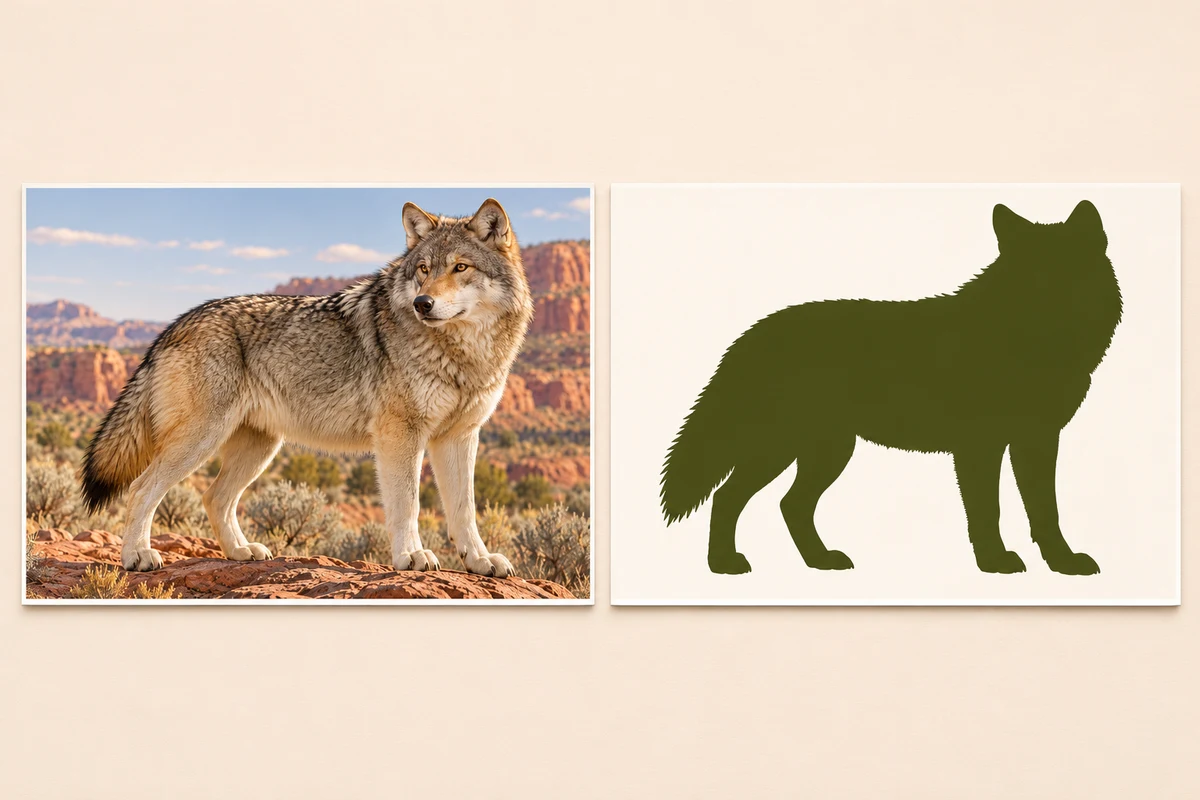
- Colour image carries the theme
- Outer shape remains recognisable
Concept illustration based on a TOPABEL animal-themed product · right-hand shape simplified for explanation
- Read the picture
- The silhouette is still recognisable without internal detail. Its boundary tells you what belongs to the shape.
- What it helps you recognise
- Identify the theme and distinguish the depicted region from its surroundings.
- Remember
- An outline works like a recognisable cut-out shape.
An outline alone does not define scores, anatomy or a full-size scale. Read any additional regions from that design’s own explanation.
On one sheet, the four elements can share the work
A design can combine rings, a cross and a grid: the cross identifies the reference point, the grid provides position references around it and the rings divide the face into regions. An outline can add a recognisable subject around further markings. TOPABEL groups products by purpose and features, so one product can contain several of these layout elements.
- A zone question
- Look for rings or another explicitly marked boundary.
- A position question
- Find the reference cross, then use the grid if one is present.
- A shape question
- Read the outside boundary and the theme it expresses.
Say it once: rings for zones, grids for squares, crosses for centres, outlines for shapes.
Quick questions
Which pattern helps describe a mark by row and column?
Look at the grid. Rows, columns and squares provide a repeatable way to describe the mark’s position.
Which element makes a reference point easy to find?
The cross directly identifies an intersection. Rings describe regions around a shared centre; they do a different visual job.
What do the blue marks in the ring illustration demonstrate?
They occupy different bands. The rings let you describe each mark by its region; any score depends on the particular layout.
Does an animal silhouette automatically define scoring zones?
No. Its outline first identifies the shape and its boundary. Scoring regions, if present, need their own definitions.