
TOPABEL KNOWLEDGE SERIES / 08
What to check when your target samples arrive: a six-point illustrated guide
First confirm what was supplied, then check its physical details and packing, and finally record your observations. For TOPABEL samples, keep the SKU, artwork version and agreed requirements together. Initial visual checks help find differences; they do not replace a separate evaluation of the intended use.
Store and inspect · About 6 min read
Checks 1–2 · identity and finished dimensions
Keep the carton and labels before opening. Match the complete SKU, artwork revision and requested sample configuration to the supplied item. Then lay one sheet flat and measure its finished outer width and height. For a round item, check its diameter. Measure the printed area separately if it matters to your requirements.
- Record
- SKU, artwork revision, stated size and measured size, with the same units.
- Compare
- Use the agreed specification and tolerances, rather than estimating from a product photo.
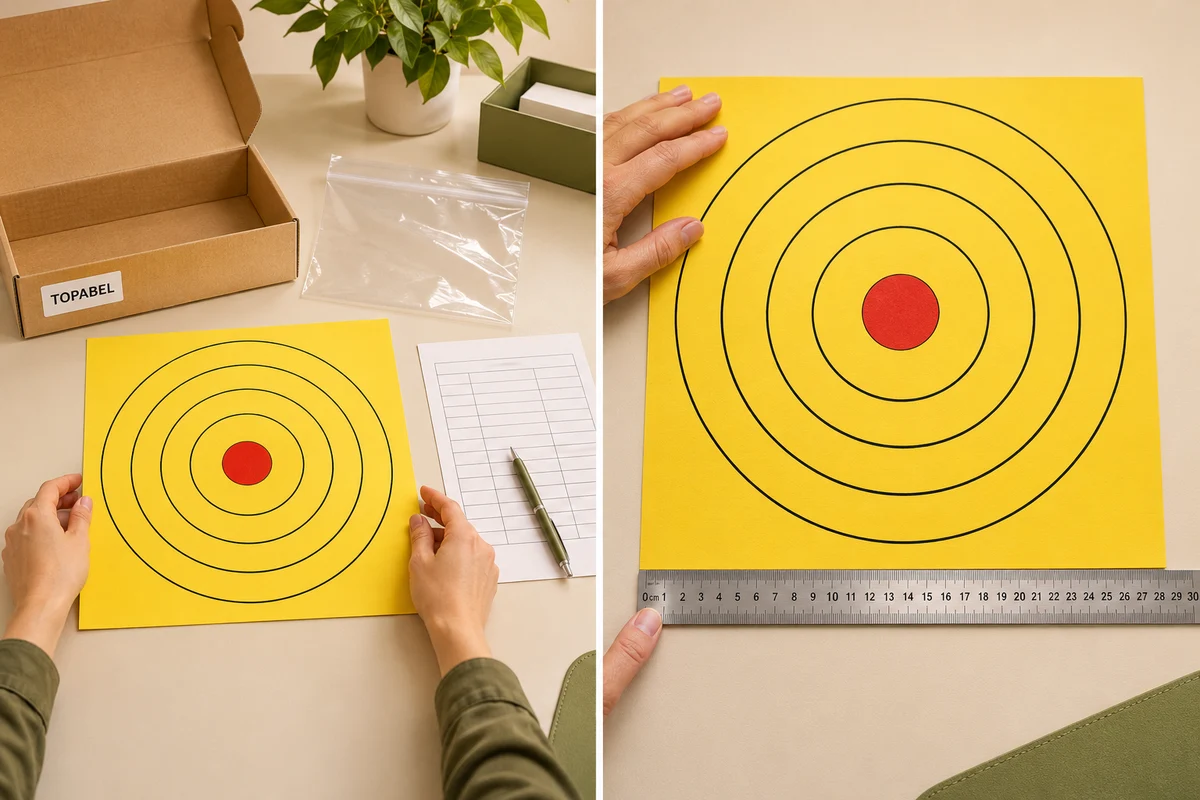
- Match the item and its records
- Measure the finished outer edge
AI-generated educational illustration · not a product test record
The ruler image demonstrates placement, not a certified measurement or a dimension for a named SKU.
Checks 3–4 · print, cut edges and backing
Check the whole face first, then inspect fine lines, colour boundaries and cut edges. Look for a missing element, smudging, visible misalignment or damaged edges, and compare against the agreed artwork or retained sample. For an adhesive target, use one sample to inspect the release liner and separate a small corner. Keep other samples intact for later comparison.
- Non-adhesive paper
- Inspect the sheet itself; there is no release liner to peel away.
- Adhesive targets
- Separate a liner check from an application trial on the intended clean, dry surface.
- Record observations precisely
- Describe which edge or printed region is affected and attach a close photograph.
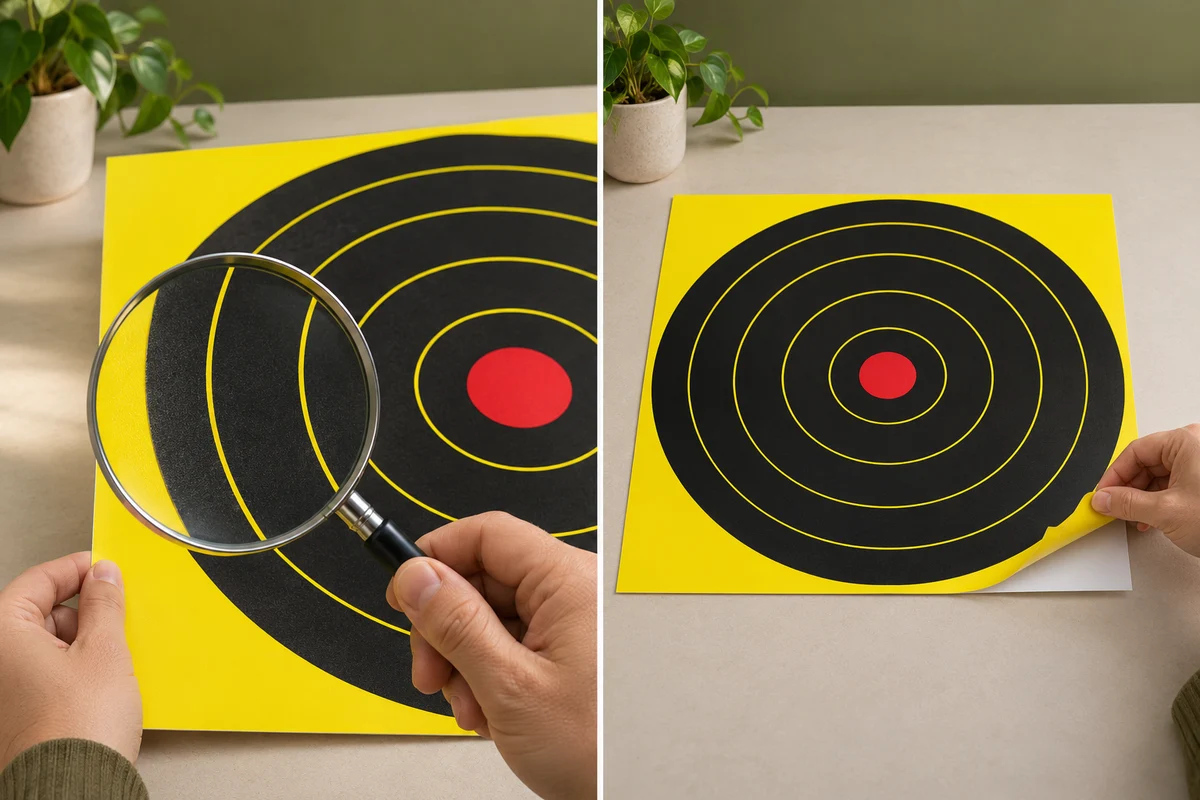
- Inspect lines and colour boundaries
- Check face and release liner
AI-generated educational illustration · not a product test record
A clean peel does not by itself establish adhesion strength or suitability for every mounting surface.
Checks 5–6 · package contents and an inspection record
Check the packing configuration, labels and contents against the sample request. Distinguish a sample pack from the retail or bulk packing being proposed. For rolls, confirm whether the count is targets per roll or the number of rolls supplied. Photograph the whole sample, any detail that differs and the packaging label together as one record.
- Identity
- SKU, artwork revision, receipt date and sample reference.
- Results
- Measured dimensions, stated packing and observed differences.
- Next action
- Accepted points, changes requested and items still requiring evaluation.
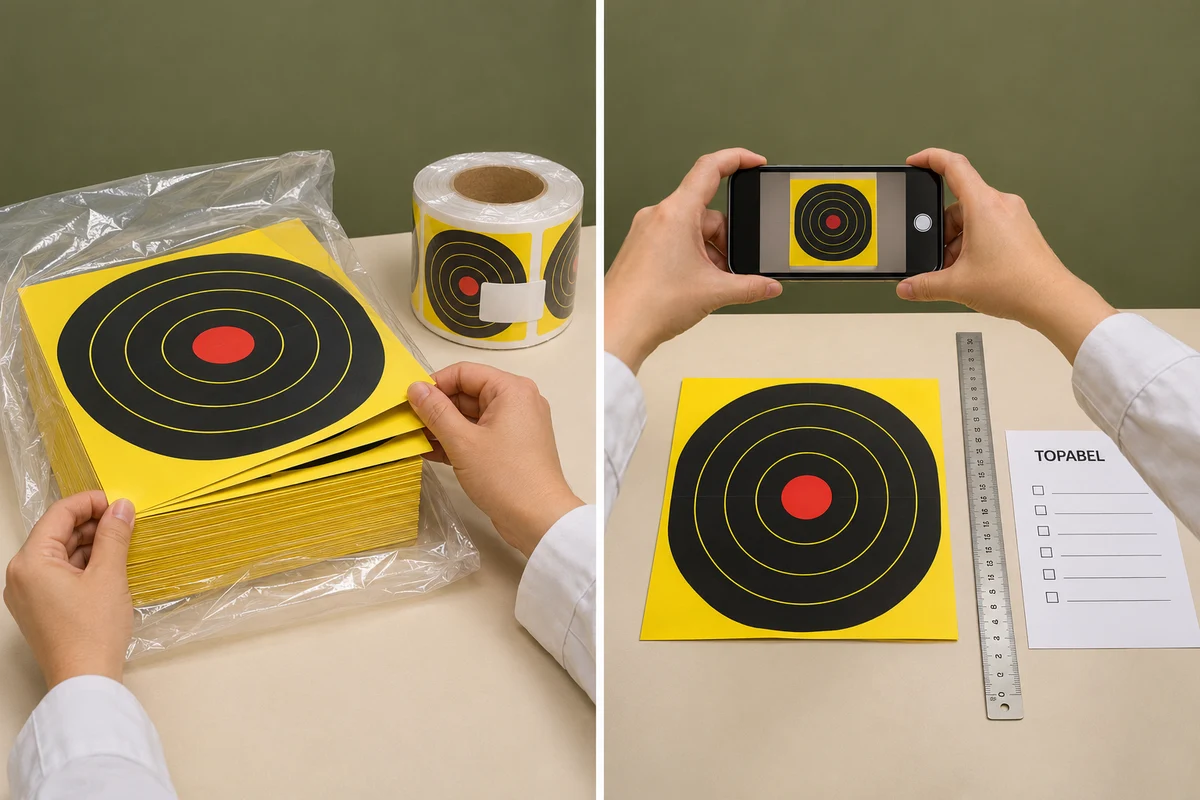
- Check contents and packing
- Photograph and keep a record
AI-generated educational illustration · not a product test record
A clear record is more useful than a message saying only “looks fine” or “something is wrong”.
After receipt checks, evaluate the intended use separately
Visual checks answer whether the supplied item matches its records. A separate application or use evaluation answers whether it meets the agreed purpose. For a reactive finish, record the lighting and viewing conditions when assessing appearance. For adhesive backing, record the mounting surface and observation time. Keep subjective impressions separate from measurements.
- Before evaluation
- Agree on the items, conditions and acceptance criteria.
- When confirming a sample
- Identify whether the acceptance reference is a retained physical sample, photographs or another agreed record.
- For TOPABEL orders
- Keep the confirmed reference identifiable. Pre-shipment sampling checks are compared with the agreed reference.
Six checks to remember: identity, dimensions, print, backing, packing, records.
Quick questions
Do non-adhesive sheets need a liner check?
No. Check its paper, print and cut edges. A liner check applies to products supplied with adhesive backing and a release liner.
Does a sample bag define the final retail packing?
Not necessarily. Confirm whether the sample includes the proposed finished packing, its labels and agreed contents.